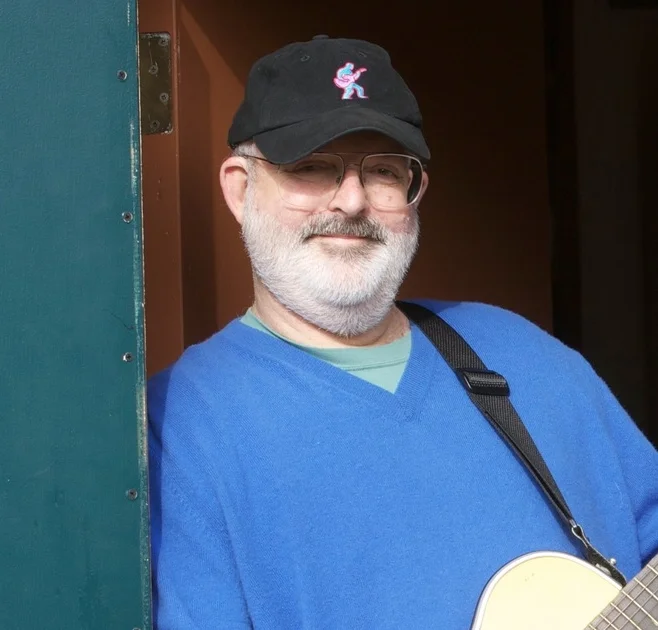
Jack Tempchin, Eagles songwriter

For many of the songwriters I interview, the digital revolution has always been a part of their lives.  So it would be easy to think that they embrace technology in their songwriting process.  Not so.  All of them use journals, diaries, little black books, even typewriters.  Heck, one even still owns a Sony Discman.

Enter Jack Tempchin, from the southern California singer/songwriter scene in the 1970s.  When he started writing, people used yellow pads and pencils.  So we might excuse Tempchin for sticking to his original method. But what does Tempchin use?  An iPhone.  This is the bizarro world of songwriting, where twenty-somethings use typewriters and diaries, and singer/songwriters from the 70s use iPhones.  

Read More
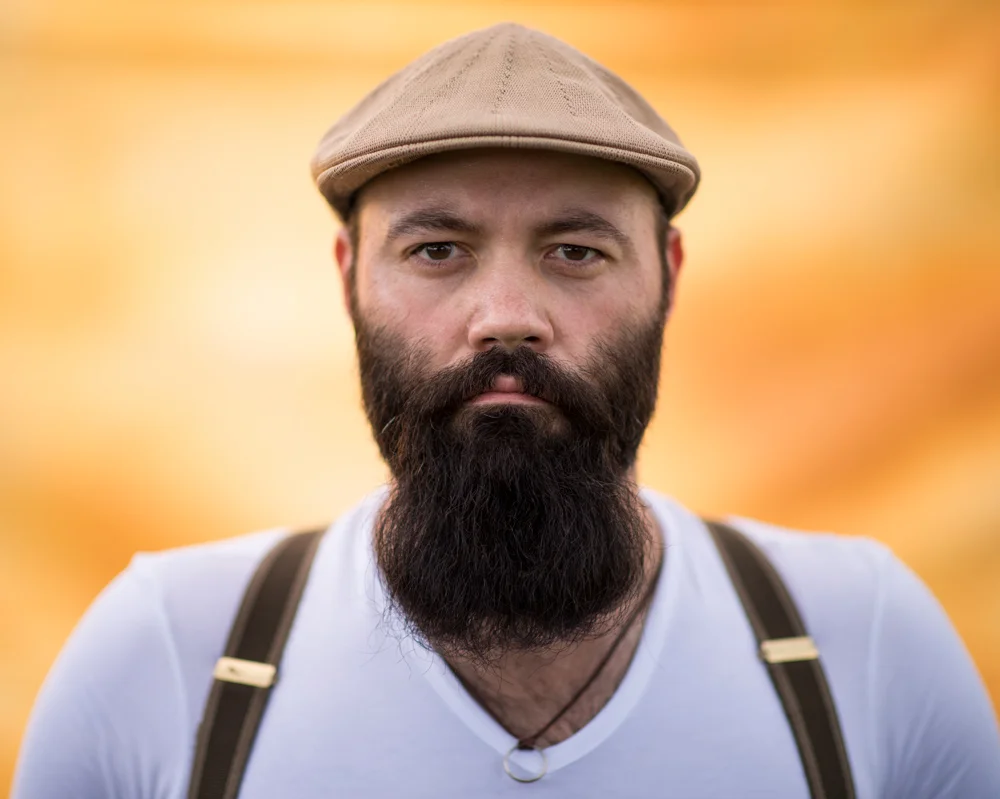
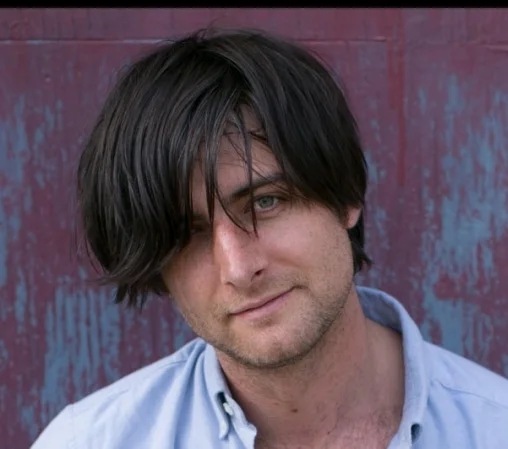
The Reverend Peyton and Washboard Breezy, The Reverend Peyton's Big Damn Band

It’s hard to describe something when you have no frame of reference, when you have no means of comparison.  Such is the case with The Reverend Peyton’s Big Damn Band.  When I wrote this review of the band’s latest release The Wages (SideOneDummy records) last week in the Washington Post, I was asked to name a couple of acts that the band might sound like.  I was stumped. Because in The Reverend Peyton’s Big Damn Band, we may finally have found that one band in rock and roll who truly sounds like no one else. 

The Reverend Peyton’s Big Damn band consists The Rev on bottleneck slide guitar (his oldest guitar was made in 1935), his wife Washboard Breezy on the washboard, and his cousin Aaron “Cuz” Persinger on drums (and five gallon bucket).  They hail from rural Brown County in Indiana.  The Rev’s songs are all true stories; he writes about what he knows.  So yes, his mother’s fried potatoes really are the best (“Your Mama’s Fried Potatoes”), a cousin really was on Cops (“Your Cousin’s on Cops”), and The Rev’s brother really did steal a chicken from a zoo (“Fort Wayne Zoo”).

 When it comes to The Reverend Peyton and his songwriting, one thing matters above all else: melody.  That’s why, as I wrote in my Washington Post review, it’s impossible to stay still at one of their shows.  They play front porch, gather-round-and-dance blues with aplomb. 

Read More
Stuart McLamb, The Love Language

If you are expecting Stu McLamb, leader of The Love Language, to talk about all the drama that led up to his first album—you know, the breakup—you won’t find it here.  After the endless internet fixation on it last year, neither of us had any interest in revisiting that topic.  What we did talk about was how McLamb writes. And that’s an overlooked topic—but one that should be discussed, because the man can write a great melody. 

The Love Language’s new release is Libraries(Merge Records).   McLamb talks about the new release having a “beach vibe.”  We talked on the phone before the band was about to begin their tour in support of Libraries.  I was impressed by the focus with which he approaches the melody side of the writing process.  With McLamb, the melody always comes first, in two ways.  One, it’s the first thing he writes.  And two, it’s the most important part of the song.  To say he is meticulous in the crafting of his melodies would be an understatement.   In his own words, he “obsesses” over them.  

Read More
Laura Burhenn, The Mynabirds

First year writing courses, those introductory classes that many students are required to take in their first semester of college, can sometimes be a challenge for teachers. I taught it as a TA when I was getting my PhD.  To be sure, I always loved it because I got to expose first-year students to lots of great writing from a variety of genres.  I wanted my students to be as enthusiastic as I was about writing and about great works of literature. But the reality is that not everyone shared this enthusiasm.  However, every so often a student would show up on that first day of class whose obsession with literature matched mine, whose eyes also lit up at the mention of a Galway Kinnell poem.

Enter Laura Burhenn, leader of the Mynabirds, her new band.  I was Laura’s first year writing teacher.   Laura and I caught up on the eve of the tour to support the band’s acclaimed debut What We Lose in the Fire We Gain in the Flood on Saddle Creek RecordsGiven the amount of literary references she drops in this interview and the impressive awareness of her writing process, I’ll take credit for most of her success!  Ok, that’s a bit of a stretch, but you won’t see many songwriters who claim Wallace Stevens and Elizabeth Bishop as influences.  Laura’s writing process is very animated—literally—and she is a big believer in freewriting as a way to generate ideas (she thanks one of her college professors below—ahem—for teaching her about it).  As you’ll see, she has a keen sense of what works for her. 

Read More
Adam Turla, Murder By Death (2010)

We'll get the obvious out of the way.  Murder by Death is not a metal band. Not even close. In the words of songwriter/singer/guitarist Adam Turla, it's "a rock and roll band with a little bit of country.  There’s a cello, a guy with a low voice, and some piano.  It’s music that can exist at any time. And we tell great stories.”

There you have it.  Murder By Death—named after the 1976 Neil Simon movie—is a rock n’ roll band.  And a damn good one. Turla and his bandmates met at Indiana University.  A religious studies and English major, Turla has been obsessed with the craft of writing since his college days, when he started writing poetry.  A self-professed lover of the classics, Turla can dish about everyone from Hemingway to Gabriel Garcia Marquez with the best of ‘em.

Read More
Tim Jones, Truth and Salvage Co.

You need only spend a few minutes talking to Tim Jones, one of the four songwriters in the band Truth and Salvage Co., to realize that he is a man without a generation.  And I mean that in a good way.  Read the book Hotel California: The True Life Adventures of Crosby, Stills, Nash, Young, Mitchell, Taylor, Browne, Ronstadt, Geffen, the Eagles, and Their Many Friends by Barney Hoskyns, and you'll see what I mean.  It's about the singer/songwriter scene in southern California from the mid 60s through the 70s.  The artists in that scene valued the craft of the song, sat around and played a lot of guitar and piano, and spoke of the emotional connection between them and their instruments.  This is where Jones belonged.

He lives a bungalow in LA--an obvious connection to the 70s singer/songwriter scene.  There is a close bond, a spiritual connection, between him, his musical instrument, and his song.  It's a genuine affection, to such an extent that he writes only when he needs his instrument or it needs him.  Theirs is a symbiotic relationship.

Read More